Prediction Markets Face Election Integrity Test in Midterms
Election-season trading on prediction markets is accelerating sharply this fall, even as a growing number of states fight in court to have the platforms classified as unlicensed casinos. The clash is raising fresh questions among election administrators about how high-stakes betting odds might shape American democracy in ways nobody fully anticipated.
Prediction market odds have already become entangled with real-world elections this year, turning the issue into an urgent topic for officials who have spent years battling misinformation and conspiracy theories at the ballot box. Their worry isn’t abstract: many fear that large financial incentives tied to election outcomes could further erode public confidence in the results, particularly if voters come to believe outside money is shaping who wins.
“This is a troubling trend that election administrators across the nation must deal with,” said Jared DeMarinis, administrator for the Maryland State Board of Elections.
Trading Surges as Legal Battles Continue
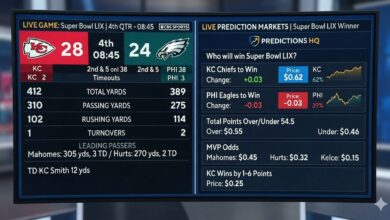
Platforms like Polymarket and Kalshi let participants buy and sell contracts tied to the probable outcome of an event, typically priced between 1 and 99 cents. Customers can trade on a wide range of races, from mayoral contests to governorships and U.S. Senate seats.
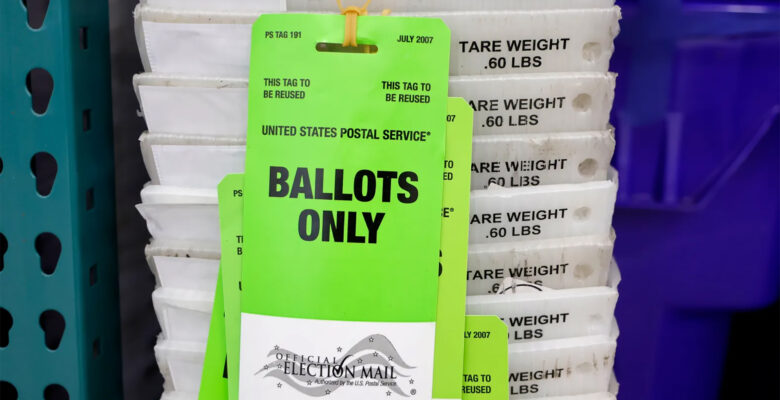
The surge in trading volume comes as President Donald Trump has pushed sweeping changes to voter identification rules and mail-in voting procedures, citing what he has falsely claimed is rampant fraud tied to mail voting and noncitizen participation — a backdrop that has only heightened scrutiny of anything touching election mechanics, including prediction markets.
For now, the legal fight over how — or whether — states can regulate these platforms remains unresolved in the courts. Roughly half of all U.S. states already have laws broadly banning betting on elections, according to the National Conference of State Legislatures, rules originally designed to ensure people vote based on candidate merit rather than a financial stake in the outcome. Courts are unlikely to settle the litigation before Election Day, meaning trading will almost certainly continue at unprecedented levels across nearly every state, with billions of dollars potentially wagered on questions like which party will control the House or Senate, or who will govern the country’s largest states.
Stock Market Comparisons and Insider Trading Safeguards
Kalshi and Polymarket executives reject the characterization of their products as gambling or a threat to democracy, arguing the activity is little different from investors trading stocks, bonds or commodities ahead of an election to hedge against how the winner’s policies might affect their portfolios or businesses.
Some independent analysts find the comparison reasonable. “One can make the argument that the entire stock market, at some level, is affected by elections and outcomes,” said Joshua Mitts, a Columbia Law School professor who studies corporate and securities law.

Both companies say they maintain insider-trading protections required under federal law, intended to stop candidates and campaign staff from trading on their own races. Kalshi disclosed on August 31 that it handed a three-year suspension and a fine to Laurie Buckhout, a Republican congressional candidate in North Carolina, for trading on her own contest.
Kalshi also points to its own research as evidence the system works as intended, saying its markets correlate strongly with real outcomes — events priced at a 60% chance, for instance, tend to happen close to 60% of the time — and that any manipulation attempt is checked by traders who profit from betting on the correct result.
Still, the platforms have had rough patches this year. Prediction markets heavily favored a losing candidate in a Wisconsin gubernatorial primary, a race where traditional polling was also badly off. In Los Angeles, as votes were being tallied in the city’s mayoral primary, online influencers accused election officials of manipulating the count to keep Republican candidate Spencer Pratt out of the runoff, pointing to market odds that had favored him finishing second.
States Push to Protect Election Integrity
With litigation unresolved, state and local election offices are increasingly focused on public education — making clear that prediction market odds are not the same thing as polling data or actual vote counts — and on tightening their own internal policies.
In Delaware County, in suburban Philadelphia, elections director Jim Allen asked the local election board to add prediction market trading to the state-required oath that bars each polling place worker and county election staffer from betting on the election. Maryland’s DeMarinis said he intends to push for a similar statewide requirement.
One key concern heading into the midterms is how prediction markets could be used, or manipulated, to benefit specific candidates. Wealthy partisans indifferent to losing money could, in theory, bid up the odds on a favored candidate simply to sway public perception. Some voters might see long odds against their preferred candidate and stay home rather than vote, according to analysts, while a favorable market position could be used by a campaign to fundraise or attract endorsements — effectively manufacturing front-runner status.
“And all of a sudden, they’re the front-runner, for no reason other than an outside actor places a large bet on them,” said Ben Schiffrin, director of securities policy at Better Markets, a nonprofit focused on public interest in financial markets.
Could a Prediction Market Actually Swing a Race?
Eric Talley, a Columbia University law professor who co-hosts the Beyond Unprecedented podcast, cited research from behavioral economist Colin Camerer showing that a single large bet placed ahead of a horse race prompted other bettors to pile onto the same horse — a herd effect that temporarily distorted the odds before fading as the race approached.
“Other people thought, ‘Oh my god, people know something I don’t,’ and they all started betting on the same horse,” Talley said, calling it “an interesting analog to the current moment.“
Prediction market officials argue that kind of distortion is inherently short-lived, since financially motivated traders will jump on a mispriced bet because they know they stand to profit, pulling the odds back toward an unbiased equilibrium. “If you’re going to try to manipulate the pricing in a highly liquid market with strong traders, it’s not going to work. The pricing will snap back, and you’ll simply lose money,” said Kalshi general counsel Rick Heaslip.
Columbia’s Mitts raised a different scenario that could worry state regulators more: a candidate in a state or local race encouraging supporters to bet on them directly, effectively motivating people to vote with their wallets. That kind of gambit would be logistically easier in a smaller race — one that might be decided by just a hundred votes or so — though Mitts noted the financial incentive would need to be substantial enough to matter, which limits how often it’s likely to occur in practice. Even so, he said, it creates a genuine headache for law enforcement.
“You can understand why states would say from the election integrity standpoint, ‘We don’t want this sort of contract to trade at all,’” Mitts said.